Masonry walls are built to last, and many of them do. Still, block and brick are exposed to sun, wind-driven rain, salt air, and moving ground, and the signs of wear can build up quietly. Knowing the early warning signs helps owners and property managers decide when to call for an evaluation. That evaluation is the first step in any masonry restoration project.
This article covers what to look for on a commercial wall, what those signs can point to, and how an assessment usually unfolds. It is a general guide. Only a qualified professional who has seen the wall can say what is happening inside it.
Surface signs that a masonry wall needs attention
Most problems show up on the face of the wall first. A slow walk around the building with a camera is often enough to spot them. Look at both sunny and shaded sides, since they weather differently.
- Cracked or crumbling mortar joints. Mortar fills the gaps between units and sheds water. When it cracks, loses material, or recedes, water can reach the units and the wall behind them.
- Spalling. This is when the face of a block or brick flakes off or breaks away in pieces.
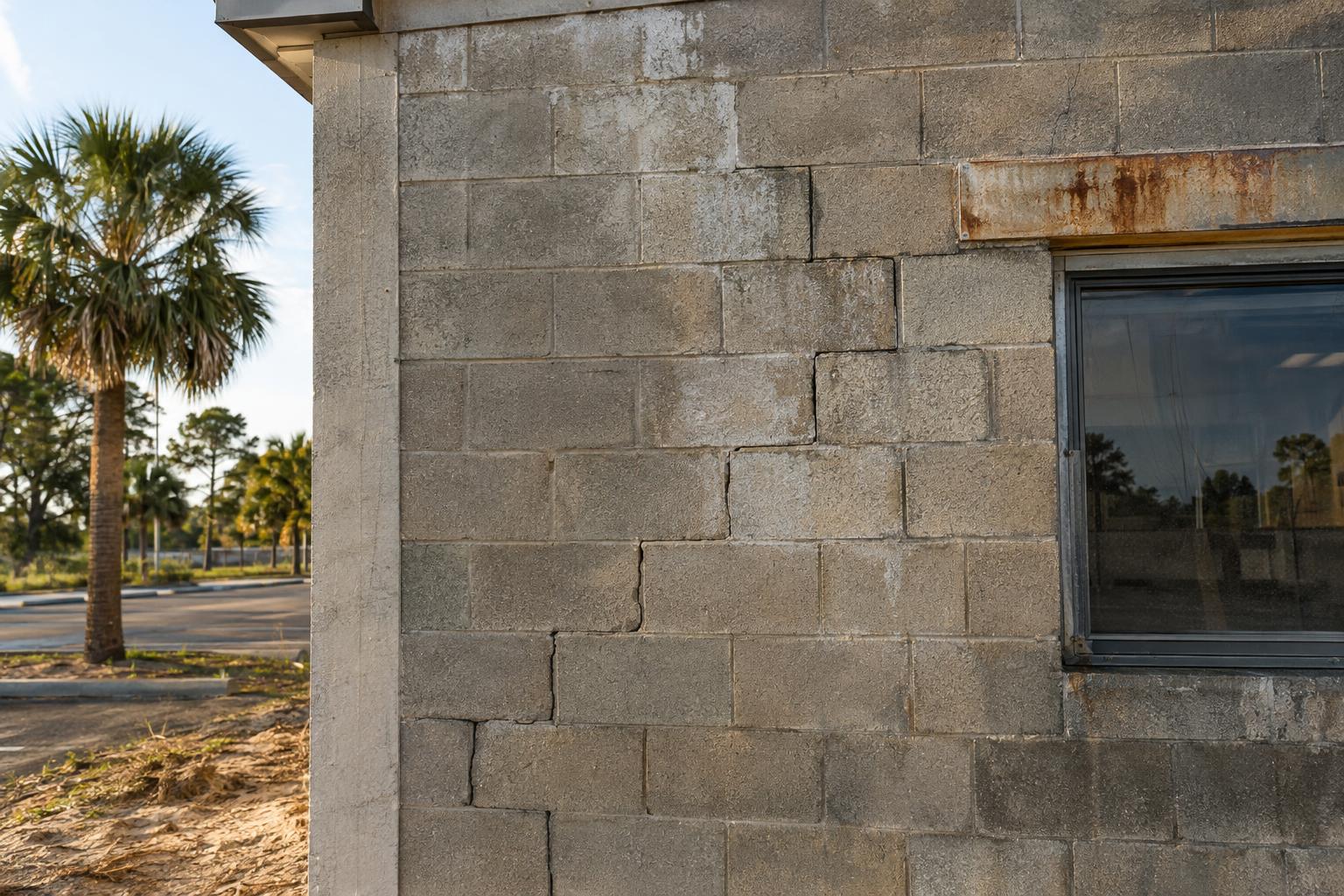
- Efflorescence. A white, chalky deposit on the surface is left behind when water carries salts through the masonry and evaporates. It tells you water is moving through the wall.
- Rust staining. Brown or orange streaks near joints or lintels can suggest that embedded steel is rusting.
- Stair-step or diagonal cracks. Cracks that follow mortar joints in a stepped pattern can reflect movement in the wall or the structure below it.
- Bulging or leaning. A wall that is no longer flat or plumb deserves prompt attention.
Photos help more than most people expect. Take pictures from the same spot and angle each season, and put a coin or ruler next to a crack for scale. A simple dated record lets an evaluator see how fast a condition is changing, which is often as useful as the condition itself.
Not every crack is serious. Hairline cracks near corners or openings are common and often cosmetic. The goal is to notice change. A crack that grows, a stain that spreads, or a gap that opens after a storm is a signal to have someone look.
What leads to masonry restoration work
Water is the most common thread. Masonry is porous, so it absorbs and releases moisture all the time. Trouble starts when water gets in faster than it can leave, or when it reaches parts of the wall that cannot handle it.
Sealant joints and flashing are frequent weak points. Caulk at windows and control joints ages and splits. Flashing and weep details that carry water out of a wall can be missing, blocked, or damaged. When those details fail, moisture collects inside the wall.
Steel is a second concern. Lintels, shelf angles, ties, and reinforcement are usually protected by mortar, grout, or coatings. If water reaches them, rust can form, and rust takes up more space than steel. That swelling can crack the masonry around it.
Movement is the third cause. Foundations settle, roofs and slabs expand and contract, and heavy impacts can damage walls. Walls need control joints that let them move, and when those joints are filled with rigid mortar or paint, stress can end up in the units instead.
Florida adds salt air near the coast, strong storms, and long periods of heat and humidity. These do not doom a wall, but they raise the value of regular inspections.
How a wall gets evaluated
A responsible evaluation starts with a visual review, then goes deeper where the signs call for it. The person doing the work is usually the owner’s structural engineer or a building envelope consultant, depending on the issue.
Typical steps include a walk-through with photos, tapping or sounding of the wall to find loose or hollow areas, and a review of the original drawings if they exist. Where concealed conditions are suspected, a small opening can be made to look at lintels, ties, or reinforcement. Testing of mortar or units, if needed, is done by a laboratory the engineer directs.
The output is usually a written report with findings and recommended repairs. For anything that could affect structural safety, the engineer’s report should lead the scope. A masonry contractor then prices and performs repairs to match those findings.
For neutral technical background, The Masonry Society publishes standards and educational material that cover how masonry is designed and maintained.
One point on scope is worth stating clearly. Evaluation, engineering, and repair design belong to the owner’s engineer or consultant. Southwest Structural Inc builds structural concrete and masonry, and our masonry work includes repair, re-pointing, and structural rework of existing masonry where the scope is structural. We perform that work to the engineer’s documents. We do not do the structural assessment or the engineering, and coatings and cosmetic resurfacing sit outside that scope.
What repairs can include
The right repair follows the cause. Fixing the surface without fixing the water path usually leads to the same damage returning.
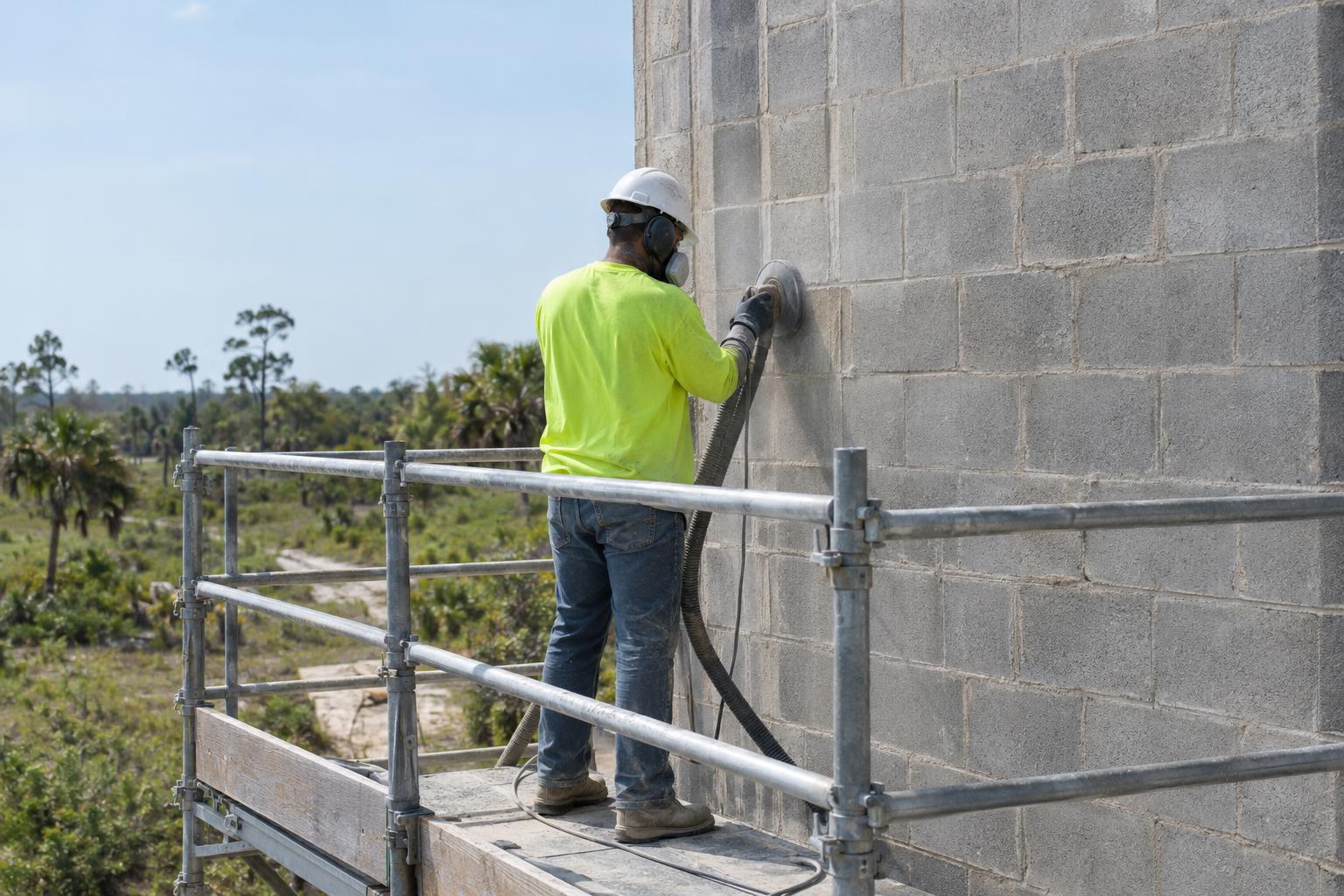
Common repair categories include repointing, where deteriorated mortar is cut out and replaced with new mortar that is compatible with the existing wall. Damaged units can be removed and replaced. Cracks may be stitched or rebuilt, depending on what caused them. Sealant and coating repairs are separate scopes that the owner’s consultant specifies. Where steel has rusted, the affected area is opened up, the steel is addressed as the engineer directs, and the masonry is rebuilt.
Some repairs touch structural elements. A bulging wall or a failed lintel can call for temporary shoring while the work proceeds. Those decisions come from the engineer, and the plan should be written down before anyone starts removing masonry.
Matching matters on visible walls. Mortar color and hardness, unit size, and texture all affect how the repair looks and performs. Mortar that is harder than the surrounding units can cause the units to crack instead of the joint. A test patch is a simple way to confirm the match before the work spreads across a whole wall.
If the repair involves new block courses or grouted cells, our article on reinforced CMU wall pre-grout review shows what is checked before cells are filled.
Planning the work around a working building
Commercial walls usually sit beside tenants, customers, and neighbors. Planning for access, noise, dust, and safe walkways is part of any project on an occupied property.
Ask how scaffolding or lifts will be placed and how pedestrians will be protected. Ask what happens if rain arrives while a wall is open, and how work is sequenced so that no section is left exposed. Ask who coordinates permits and inspections, since repairs that touch structural elements may need them.
For a wider view of how masonry work is organized from start to finish, read our structural masonry project planning guide. You can also see the services we offer on our masonry services page.
Finally, keep records. Dated photos of cracks and stains, notes on repairs, and copies of reports make the next inspection faster and the next decision clearer. The Florida Building Commission is a useful place to confirm which codes apply when repairs need permits.
Frequently asked questions about masonry restoration
How do I know if a crack is serious?
Look for cracks that are wider than a hairline, that grow over time, or that come with bulging, rust stains, or doors and windows that stick. Those call for a professional evaluation.
Is white residue on a block wall a problem?
It is a sign that water is moving through the wall and leaving salts behind. The residue itself is usually cosmetic, but the water path should be found and addressed.
Can mortar joints be repaired without replacing the wall?
Often, yes. Repointing replaces deteriorated mortar while leaving sound units in place, provided the units and the wall behind them are in good condition.
Who decides what repairs are needed?
For structural concerns, a qualified engineer evaluates the wall and sets the scope. A masonry contractor then builds the repairs to those findings.
Owners with a wall that is showing signs of wear can send photos and the property location through our contact page. We can talk through what repair scope might apply, and where the owner’s engineer needs to weigh in first.