A commercial concrete bid package should give qualified contractors enough current information to price the same defined scope and state meaningful assumptions. Sending a floor plan and asking for a lump sum invites each bidder to fill gaps differently. One may include excavation, reinforcement, pumping, testing, or curing that another excludes. A better package identifies controlling documents, placement areas, alternates, schedule, logistics, trade interfaces, permit and inspection responsibilities, submittals, and closeout requirements. It does not guarantee that design development or hidden conditions will never change the work.
Issue a Current, Indexed Document Set
Provide structural, architectural, civil, geotechnical, landscape, equipment, and trade documents that affect concrete. Include specifications, addenda, bid forms, scope narratives, and available reports. Create an index with dates and revisions so bidders can state exactly what they used.
Identify whether documents are permit, bid, design-development, or construction issues. If information is incomplete, say so and request allowances, unit prices, or clearly labeled assumptions where appropriate. Do not present a preliminary package as final.
Include a bid schedule that gives contractors enough time to review the documents, visit the site when required, ask questions, obtain supplier pricing, and prepare a complete response. An unrealistically short period encourages hidden assumptions rather than comparable proposals.
Protect confidential or controlled information while ensuring bidders receive the files needed for scope. Use a consistent distribution channel and record addenda. A bidder who misses one revised structural sheet may price a materially different job.
The American Concrete Institute’s concrete specifications overview explains the role of written requirements in concrete construction. The project’s own contract documents remain the controlling source.
SSI’s commercial estimating page offers a practical submission path for concrete and masonry scopes in South Florida.
Write the Scope Boundaries and Alternates
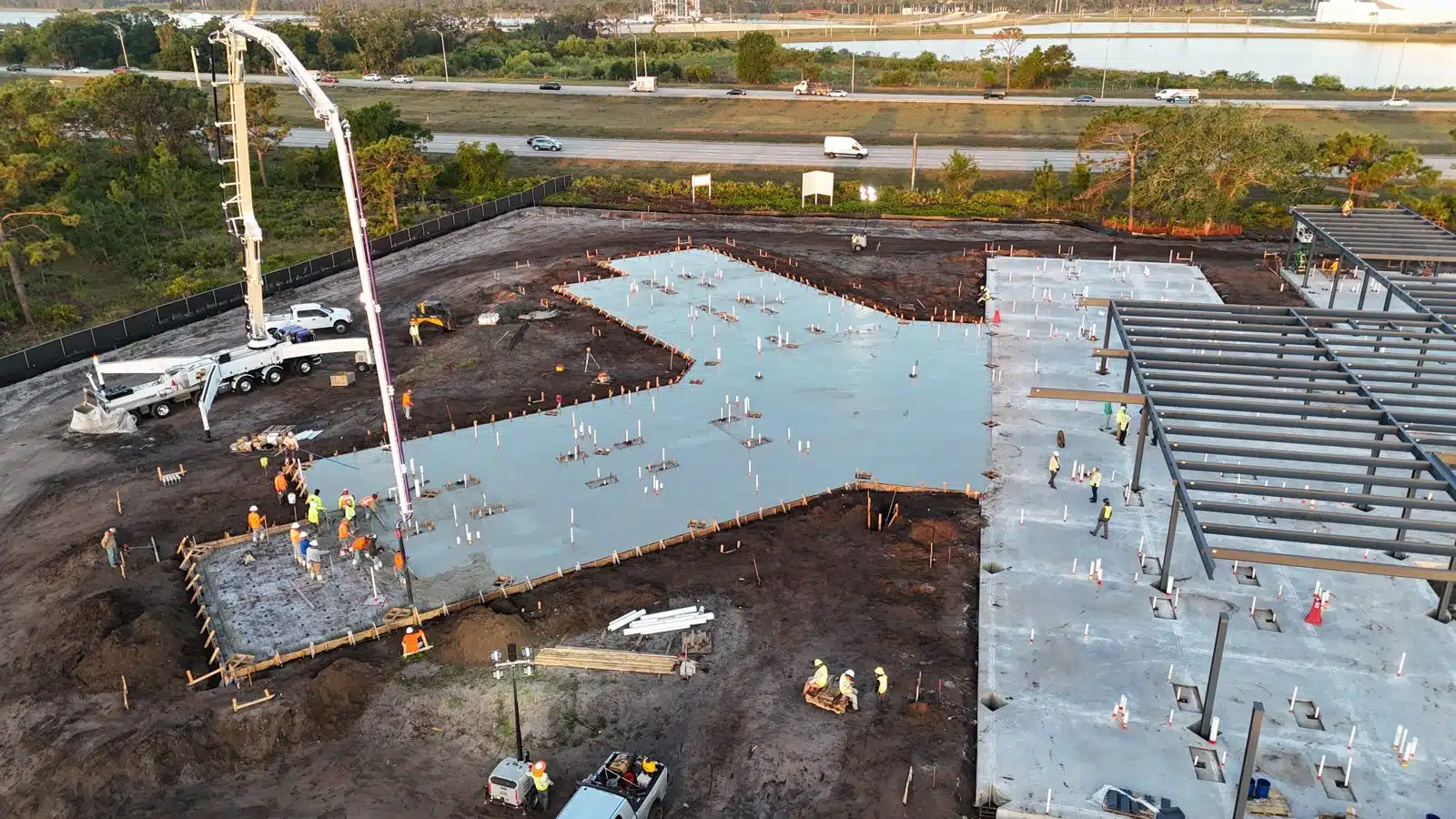
Describe each concrete element and the expected division of work. Address excavation, base, forms, reinforcement, embeds, vapor-control materials, supply, pumping, placement, finishing, joints, curing, protection, cleanup, demolition, restoration, and closeout as applicable. State work by others.
Reinforcing steel may involve detailing, fabrication, supply, placement, couplers, supports, and inspections. Embedded items may come from several trades. Name the responsibilities rather than assuming bidders interpret “complete concrete” the same way.
Use alternates for genuine choices, not unresolved core design. Identify the exact quantity or scope changed by each alternate. Unit prices can help manage variable quantities when the basis and measurement method are clear.
Mockups, samples, trial placements, floor tolerances, exposed finishes, or specialty concrete should be described directly. These requirements can affect materials, labor, sequencing, and acceptance. Do not hide an architectural expectation inside a general “quality finish” phrase.
Temporary work deserves an assignment. Forms, shores, reshores, bracing, access platforms, excavation support, protection, and engineering may be substantial parts of the project. Identify whether they are included and who provides required design or review.
- List every placement area and relevant drawing reference.
- Identify demolition, earthwork, base, utilities, and restoration boundaries.
- Assign reinforcement, embeds, joints, curing, testing, and protection.
- Separate permit and inspection coordination from fee inclusion.
- Request exclusions, clarifications, and alternates in a consistent format.
Describe Schedule, Logistics, and Site Conditions
Provide milestone dates, anticipated placement sequence, working hours, phasing, liquidated-damage or notification provisions when applicable, and dependencies on other trades. Ask bidders to state crew or production assumptions without demanding unsupported guarantees.
Include the site plan, access routes, staging limits, vertical access, pump constraints, security, occupied-area rules, traffic control, washout expectations, storage, utilities, and known overhead or below-grade constraints. Schedule a site visit when conditions cannot be understood from documents alone.
Identify owner or general-contractor services such as water, power, survey control, hoisting, dumpsters, toilets, parking, and laydown areas. State which permits, inspections, testing, or special inspections are coordinated or paid by each party.
Weather and contingency language should be realistic. South Florida conditions can affect access and operations, but proposals should not promise an exact outcome from a generic weather allowance. Define notice, schedule update, and change procedures.
Identify required testing and inspection agencies and how their services are scheduled and paid. The concrete contractor may coordinate access and timing without owning the professional service or fee. Distinguish contractor quality control from formal acceptance.
State sustainability, waste, washout, housekeeping, noise, dust, and owner-operating requirements that affect the work. These conditions should be priced and planned, not introduced after mobilization as unwritten expectations.

Make Proposals Comparable and Reviewable
Use a bid form that organizes base scope, alternates, unit prices, allowances, schedule, assumptions, exclusions, bonds or insurance, submittals, and validity period. Require bidders to acknowledge addenda and list the document revision used.
Compare scope before price. Normalize differences and ask written clarification questions. A lower number may shift pumping, reinforcement, testing, temporary works, or cleanup to another party. Avoid silently adding assumptions to a contractor’s proposal during evaluation.
Check license and qualification information appropriate to the project. Southwest Structural Inc holds Florida Certified General Contractor license CGC062491, verified Current and Active on October 15, 2026, with expiration August 31, 2028. Recheck status before a later award.
After selection, incorporate agreed clarifications and alternates into the contract. The final agreement should not rely on an email chain that field personnel will never see. Issue current documents and hold a scope handoff with estimating and operations.
The handoff should identify unresolved design items, allowances, long-lead materials, approved substitutions, schedule dependencies, and owner decisions. Estimating assumptions need to become field-visible controls or formal change items.
Keep an audit trail of bid questions and answers. Material answers should be shared consistently during bidding, and the final contract should reflect them. Fair information distribution protects the owner and contractors from scope disputes.
Quantity summaries can help bidders check the package, but they should state whether they are informational or contractual. Contractors should verify quantities under the bid rules and identify discrepancies. An owner quantity does not replace the plans or shift every design uncertainty to the bidder.
Define the change process before award. The agreement should explain notice, pricing, authorization, documentation, and schedule treatment for design revisions or differing conditions. Clear procedures allow the team to handle real changes without pretending they will never occur.
Finally, align payment breakdowns with measurable work. Mobilization, forms, reinforcement, placements, curing, testing support, and closeout may provide useful schedule-of-values categories when appropriate. Avoid a payment structure that obscures incomplete scope.
Retain the final bid tab and scope reconciliation with the contract record.
Frequently Asked Questions
Can a contractor provide a firm price from incomplete drawings?
A contractor can provide a budget or qualified proposal, but incomplete design requires visible assumptions, allowances, exclusions, or later reconciliation.
Should concrete pumping be a separate line item?
The bid format may separate it or include it, but the package should make the assumption clear so proposals cover the same logistics.
Are permit and inspection fees included by SSI?
Not automatically. SSI can coordinate within an accepted scope, while permit and inspection fees remain excluded unless the written agreement states otherwise.
What is the best way to handle bidder questions?
Use a written question deadline and distribute material clarifications consistently through addenda or the project’s bid process.
To submit a commercial concrete or masonry package for review, contact Southwest Structural Inc or call (239) 410-3943. Include the indexed current documents, project address, scope narrative, bid form, schedule, logistics, and question deadline.